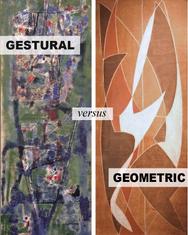
Exploring the emergence and rivalry of the divisive factions of post-war abstraction in France.
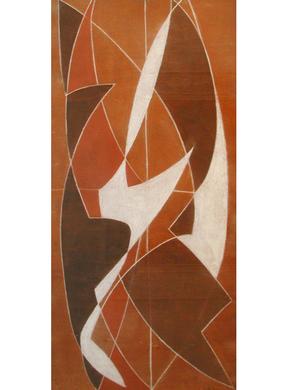
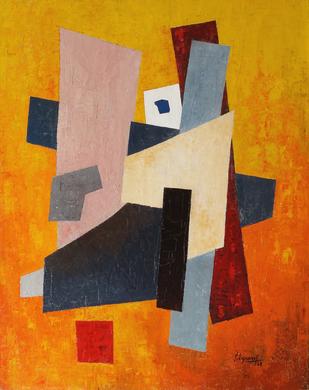
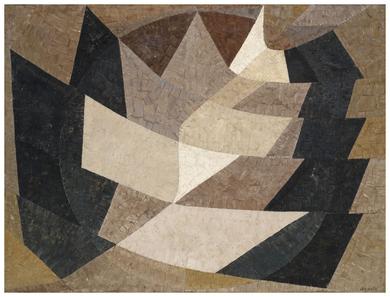
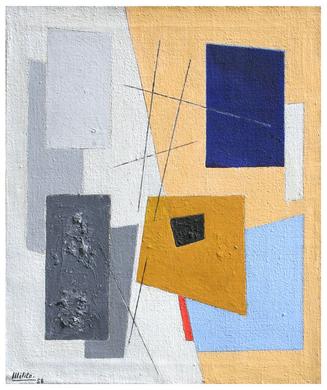
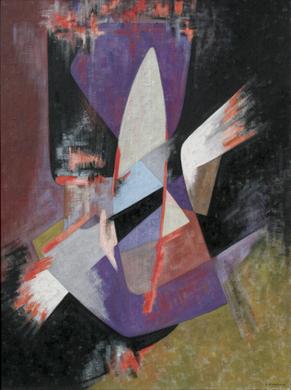
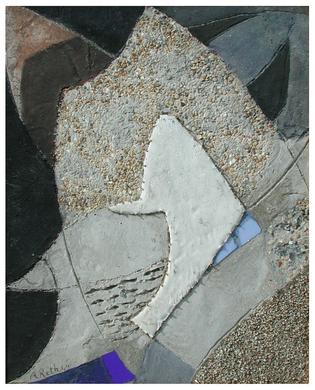
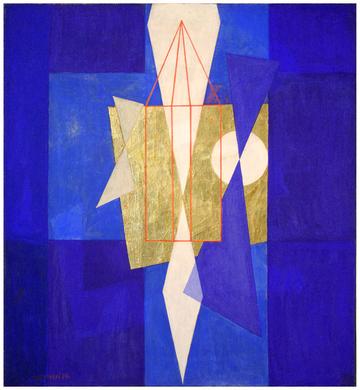
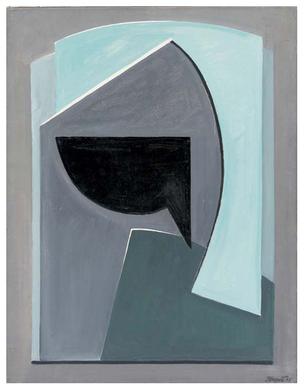
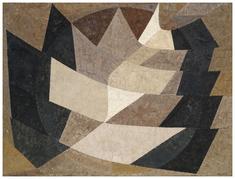
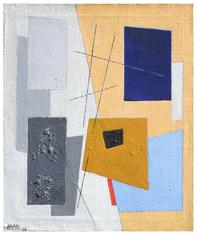
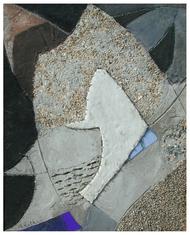
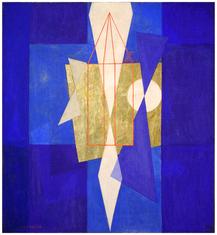
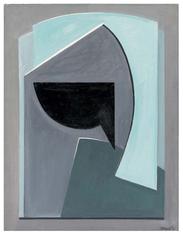
In 1946 the "Salon des Réalités Nouvelles" was established by Frédo Sidès in an effort to galvanise support for Geometric Abstraction which was still struggling to gain mainstream acceptance. Participating artists comprised of previous Art Concrete, and Abstraction Création members, including Albert Gleizes, Jean Arp and Sonia Delaunay, as well as a new generation of artists in search of a rational and universal aesthetic that transcended the chaos of human conflict, such as André Bloc, Edgard Pillet and Jean Deyrolle.
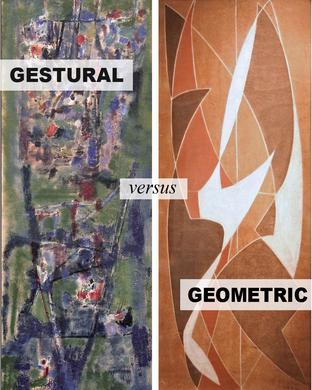
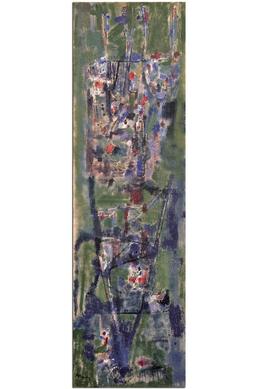
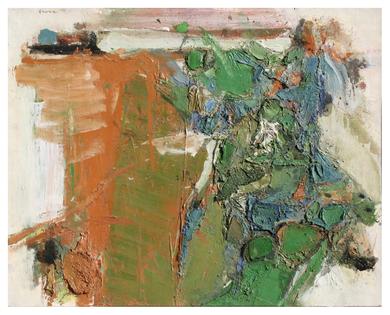
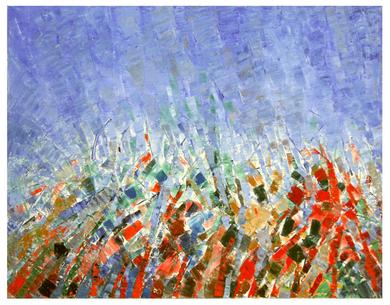
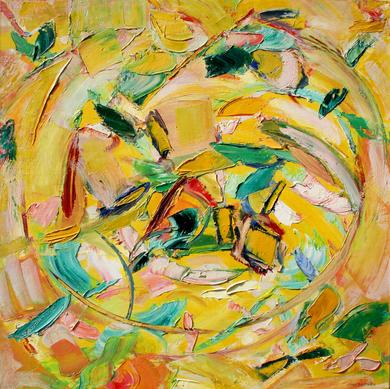
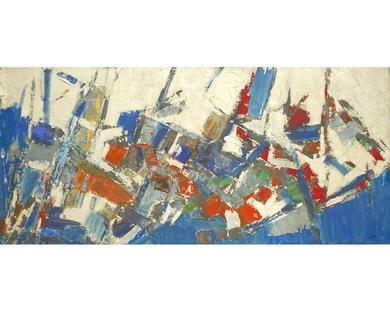
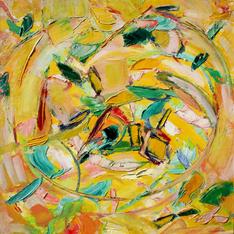
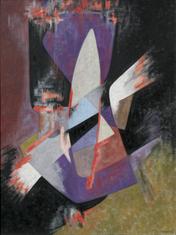
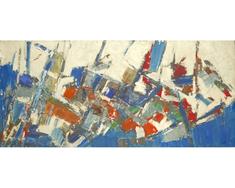
Meanwhile several artists associated with the Surrealist group, including Camille Bryen, and Henri Michaux, had been experimenting with “automatic” writing, drawing, and then painting. Initially referred to as “Tachisme”, this technique presented a new form of abstraction, dependent on expressive gestures, emphasizing the subjective and irrational. In 1947 Bryen and Georges Mathieu organised an exhibition titled “L’Imaginaire” at Galerie du Luxembourg including Hartung, Wols and Riopelle. The critic Jean José Marchand refers to their style as “lyrical abstractivism”, presenting it as raw and authentic. The following year the group held further groundbreaking shows “White and Black” at Galerie Deux Iles, and “HWPSMTB” at Galerie Colette Allendy. This new movement was championed by critics such as Charles Estienne who wrote damming articles about “cold” cerebral geometric abstraction; and Michel Tapié who would coin the terms “Art Informel” and “Art Autre”.
Undeterred, the devotees of Geometric Abstraction, rallied to their own cause and belief in a universal harmony, with the support of critics such as Michel Seuphor and Léon Degand. In 1949 André Bloc launched “Art d’Aujourd’Hui” magazine; and Auguste Herbin published “L’Art Non-Figuratif. Non-Objectif”. In 1950 Edgard Pillet and Jean Dewasne founded the “Atelier d’Art Abstrait” as a centre for debate and dissemination. In 1951 the “Espace” organisation was formed to encourage integration between art, architecture and design.
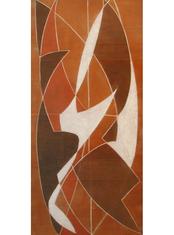
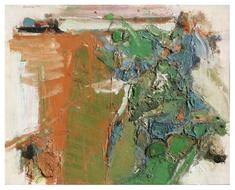
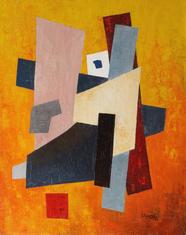
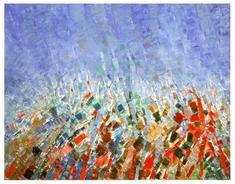
This exhibition at Hanina Fine Arts brings together artists from both factions, to explore their ideals, and development along with archive material from this historic era.